How AI Automation Is Reshaping Real Estate Operations
Real estate operations have historically relied on manual workflows, fragmented data systems, and human expertise to manage complex processes. From verifying property documents to coordinating transactions, many operational tasks require extensive time and attention from legal teams, analysts, and operational staff.
However, as transaction volumes increase and regulatory requirements become more complex, these manual processes are increasingly difficult to scale.
This is where AI automation is reshaping real estate operations.
Across brokerages, mortgage providers, property developers, and legal firms, organizations are adopting intelligent automation systems that streamline workflows, reduce manual work, and enable faster decision-making.
In this article, we explore how AI automation is transforming operational processes in real estate, the types of workflows being automated, and why intelligent automation systems are becoming essential for modern property organizations.
Why Real Estate Operations Are Ready for AI Automation
Real estate transactions involve multiple operational steps that are both repetitive and data-intensive.
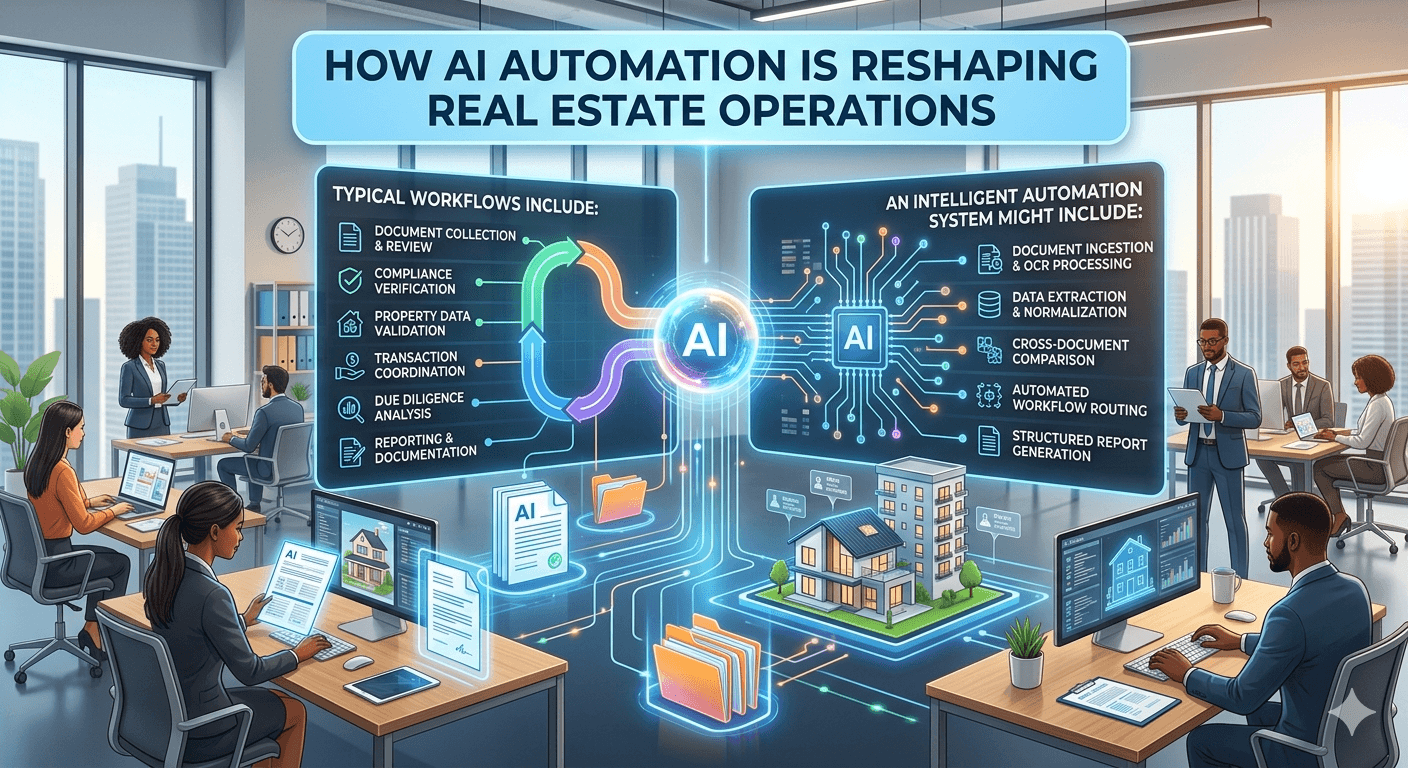
Typical workflows include:
document collection and review
compliance verification
property data validation
transaction coordination
due diligence analysis
reporting and documentation
Many of these processes involve reviewing large volumes of documents, cross-checking data, and verifying information across different sources.
These tasks are ideal candidates for automation because they follow structured patterns that AI systems can analyze and process.
Organizations adopting AI workflow automation can significantly reduce operational bottlenecks and improve overall efficiency.
Key Areas Where AI Automation Is Transforming Real Estate
AI automation is already impacting multiple operational layers within the real estate industry. The most effective implementations focus on improving workflow efficiency, decision accuracy, and operational scalability.
Below are several areas where AI automation is creating measurable improvements.
1. Document Processing Automation
Property transactions involve numerous documents, including:
- property deeds
- land records
- tax documentation
- mortgage paperwork
- legal agreements
- compliance forms
Traditionally, these documents must be reviewed manually by operational teams.
AI-powered document automation systems can now:
- extract structured data from documents
- identify missing information
- compare information across documents
- highlight inconsistencies
This dramatically reduces the time required to perform document review while improving accuracy.
For organizations handling large volumes of transactions, AI automation can transform document processing from a manual bottleneck into a streamlined workflow.
2. Workflow Automation for Transaction Management
Real estate transactions involve coordination between multiple stakeholders, including agents, lenders, legal teams, and regulators.
AI workflow automation platforms can streamline this process by automatically managing tasks such as:
- document submission tracking
- compliance verification
- workflow routing
- task notifications
- status monitoring
By automating these processes, organizations can reduce delays and improve coordination across teams.
The result is faster transactions and more predictable operational workflows.
3. Due Diligence and Risk Analysis
Due diligence is one of the most critical operational processes in real estate.
Professionals must review multiple data sources to confirm:
- property ownership
- land boundaries
- zoning compliance
- tax obligations
- regulatory documentation
AI automation systems can assist by analyzing large sets of property documents and identifying potential discrepancies.
These systems help analysts focus their attention on high-risk areas rather than manually reviewing every document.
For investment firms, lenders, and developers, this capability can significantly improve both efficiency and risk management.
4. Mortgage Processing Automation
Mortgage processing involves detailed verification of financial and property documentation.
AI automation can streamline this process by automatically analyzing application data and identifying required documentation.
Automated systems can assist with:
- document verification
- risk analysis
- compliance checks
- application review
For lenders, AI automation enables faster loan approvals while maintaining strict regulatory standards.
5. Property Data Analysis and Reporting
Operational teams often need to generate reports related to property performance, transactions, and compliance.
AI automation tools can collect and analyze large datasets to produce insights automatically.
These systems can generate reports that include:
- property performance metrics
- market trend analysis
- portfolio risk indicators
- operational summaries
Automating these reporting processes helps organizations make better decisions while reducing administrative workload.
From AI Tools to Intelligent Automation Systems
Many organizations initially experiment with individual AI tools to automate isolated tasks.
However, the most effective implementations involve integrated AI automation systems that manage entire operational workflows.
For example, an intelligent automation system might include:
document ingestion and OCR processing
data extraction and normalization
cross-document comparison
automated workflow routing
structured report generation
By integrating these capabilities into a single system, organizations can automate entire operational processes rather than individual tasks.
This shift—from tools to systems—is a major trend in real estate technology.
Why Operational Automation Matters for Real Estate Firms
Operational efficiency directly impacts the speed and reliability of real estate transactions.
Firms that rely solely on manual processes often face:
- slower transaction timelines
- higher operational costs
- increased risk of human error
- limited scalability
AI automation helps organizations overcome these challenges by enabling teams to focus on high-value decision-making rather than repetitive tasks.
For brokerages, lenders, and property platforms, intelligent automation can provide a significant competitive advantage.
The Future of AI Automation in Real Estate
As AI technologies continue to evolve, the role of automation in real estate will expand significantly.
Future AI platforms may enable:
fully automated document verification workflows
intelligent due diligence engines
predictive property risk analysis
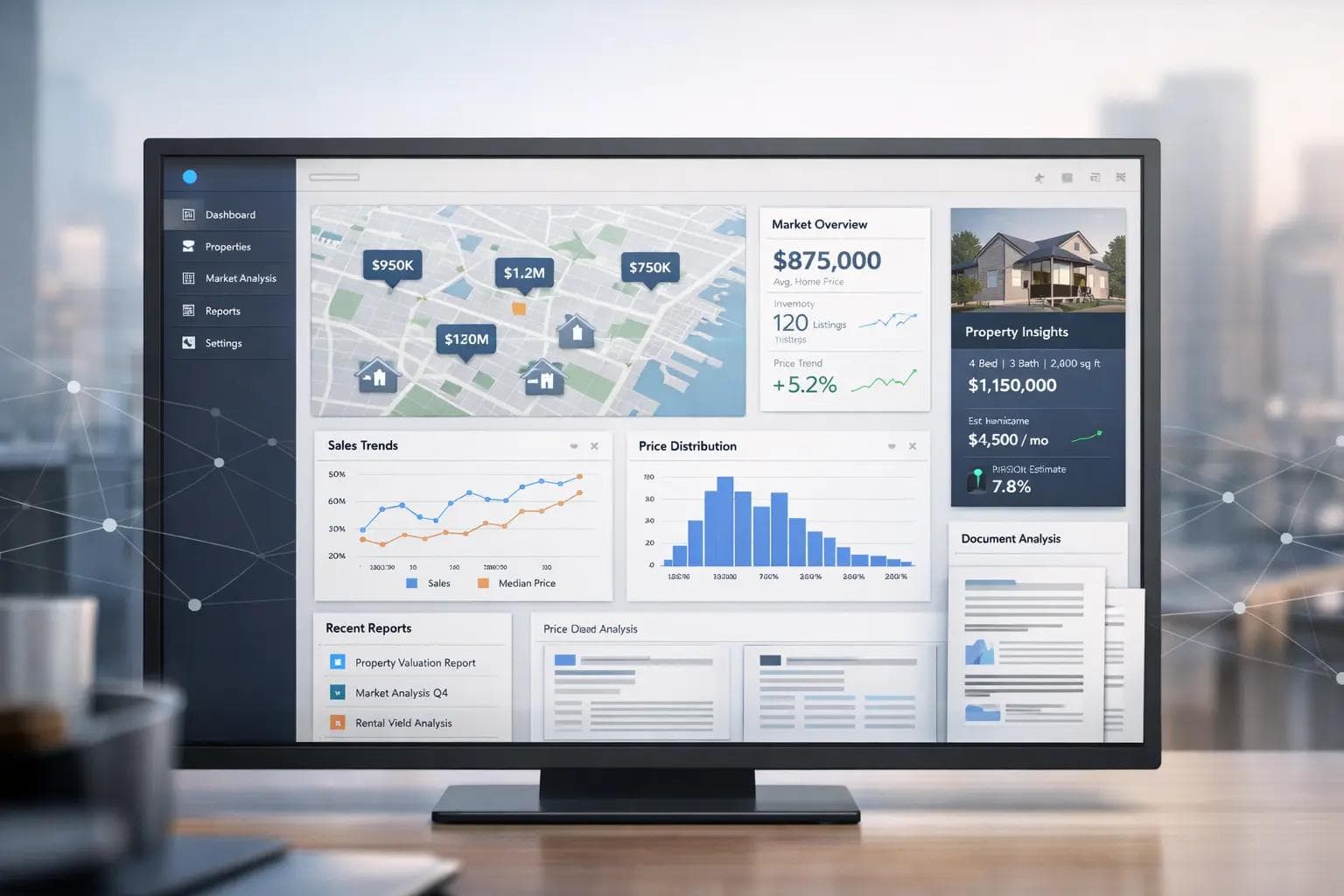
real-time operational dashboards
These capabilities will allow organizations to manage increasingly complex real estate operations with greater efficiency and reliability.
Over time, AI automation will become a foundational component of modern property technology infrastructure.
Final Thoughts
AI automation is transforming real estate operations by reducing manual workloads, improving data analysis, and enabling faster decision-making.
From document processing to transaction management, intelligent automation systems are helping organizations streamline workflows and scale their operations more effectively.
As the industry continues to evolve, the integration of AI automation into real estate operational workflows will play a critical role in improving efficiency, reducing risk, and supporting more intelligent property decisions.